Email verification API — block bad addresses at the door
A live API that tells you whether an address is disposable or fake, so you can reject it at signup rather than clean it up later.
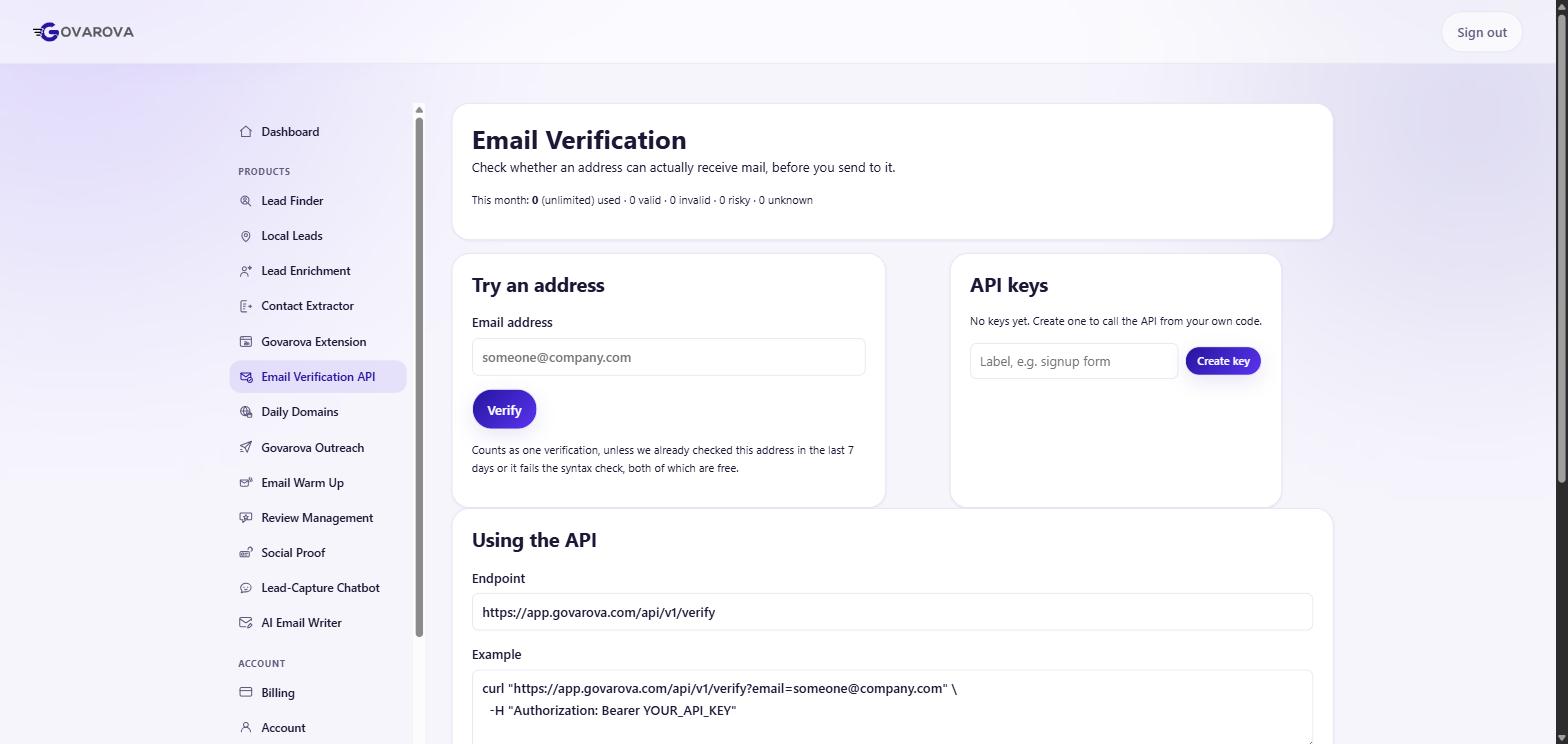
This one is an API console, not a dashboard. You get a URL, a key, and a demo explorer to test a single address against it.
The response is a small JSON object — is it a business email, is it disposable — which is exactly enough to make a decision at the moment of registration.
Why the point of use is signup, not send
You can clean a list before a campaign, and you should. But the cheaper strategy is never to acquire the bad address in the first place.
Wired into a registration form, one API call does three things at once:
- Catches the typo while the user is still there to fix it. The underrated one. It is not a security feature, it is a conversion feature — a user who mistyped their address and never got the confirmation email is a lost customer who thinks your product is broken.
- Blocks disposables before they become free-trial abuse. One person, fifty accounts, is a disposable address problem before it is anything else.
- Keeps the database clean by construction, so the “we need to clean 200,000 records” project never happens.
Why any of this matters
A dead address does not merely fail to arrive. Bounce rate is one of the cleanest signals a mailbox provider has for “is this sender writing to people who asked to hear from them”, so a high bounce rate degrades delivery to the addresses that are real. You do not lose the dead addresses — you never had those. You lose the live ones. The mechanism is set out in bounce rates and sender reputation.
A note on the screenshot
There isn't one. The console displays your live API key in plain text, and a key in a screenshot is a key in a screenshot. Treat that page as a secret.
The product behind this
Email Verification API
Validate every address in real time and block disposable, invalid, and trap emails at signup.
Read next
Data Enrichment — turn a list of companies into contacts
Paste domains or company names; get back verified emails, job titles and firmographics for the people who work there.
Read →Find B2B companies — build the target list first
Search a company database by the attributes that actually predict fit, then enrich the companies you keep.
Read →Find B2C local businesses
Plumbers, dentists, restaurants. A different segment with different rules — and free-mail addresses are not a data-quality problem here.
Read →