Collecting reviews
Ask at the right moment, approve before anything is public, and show the result on your own site.
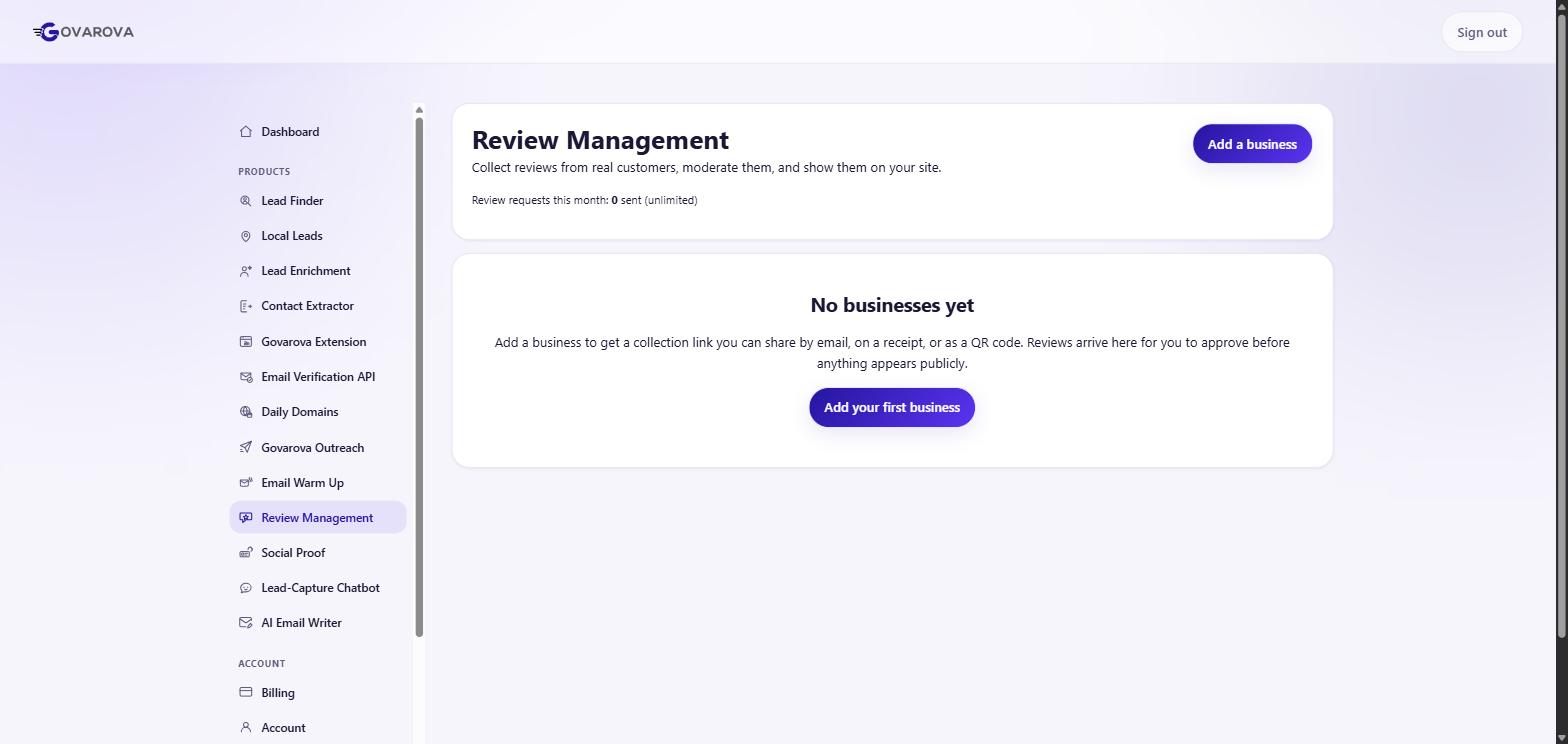
Add a business and you get a collection link. Share it by email, print it on a receipt, or turn it into a QR code for a counter or a van. Reviews arrive in your dashboard.
Nothing goes public until you say so
Every review lands unapproved. You read it, then publish it or leave it. That is not about hiding criticism — a wall of five stars with no complaint on it is the least convincing thing on the internet — it is about not having somebody's mistake, or somebody's abuse, appear on your site automatically at three in the morning.
Ask at the moment the work was good
The single biggest lever is timing, and it is not a Govarova setting: it is when you send the link. The day the job finished beats a month later by a margin no amount of copywriting closes. Send it while they are still pleased with you.
Where the reviews then go
- A widget on your own site, from Social Proof, which can cycle published reviews alongside live activity.
- A public collection page per business, which is noindex on purpose — it is your review form, and it should not compete with your own site in search.
Replying
You can draft a reply with AI from the review screen. It is a draft. It goes out when you send it, and reading it first is the whole job — a generated apology to a specific complaint is worse than no reply if it answers the wrong thing.
The product behind this
Review Management
Ask every customer at the right moment, chase the ones who forget, and manage every platform from one dashboard.
Read next
Data Enrichment — turn a list of companies into contacts
Paste domains or company names; get back verified emails, job titles and firmographics for the people who work there.
Read →Find B2B companies — build the target list first
Search a company database by the attributes that actually predict fit, then enrich the companies you keep.
Read →Find B2C local businesses
Plumbers, dentists, restaurants. A different segment with different rules — and free-mail addresses are not a data-quality problem here.
Read →